AI + China’s Supply Chain: The Next Competitive Advantage
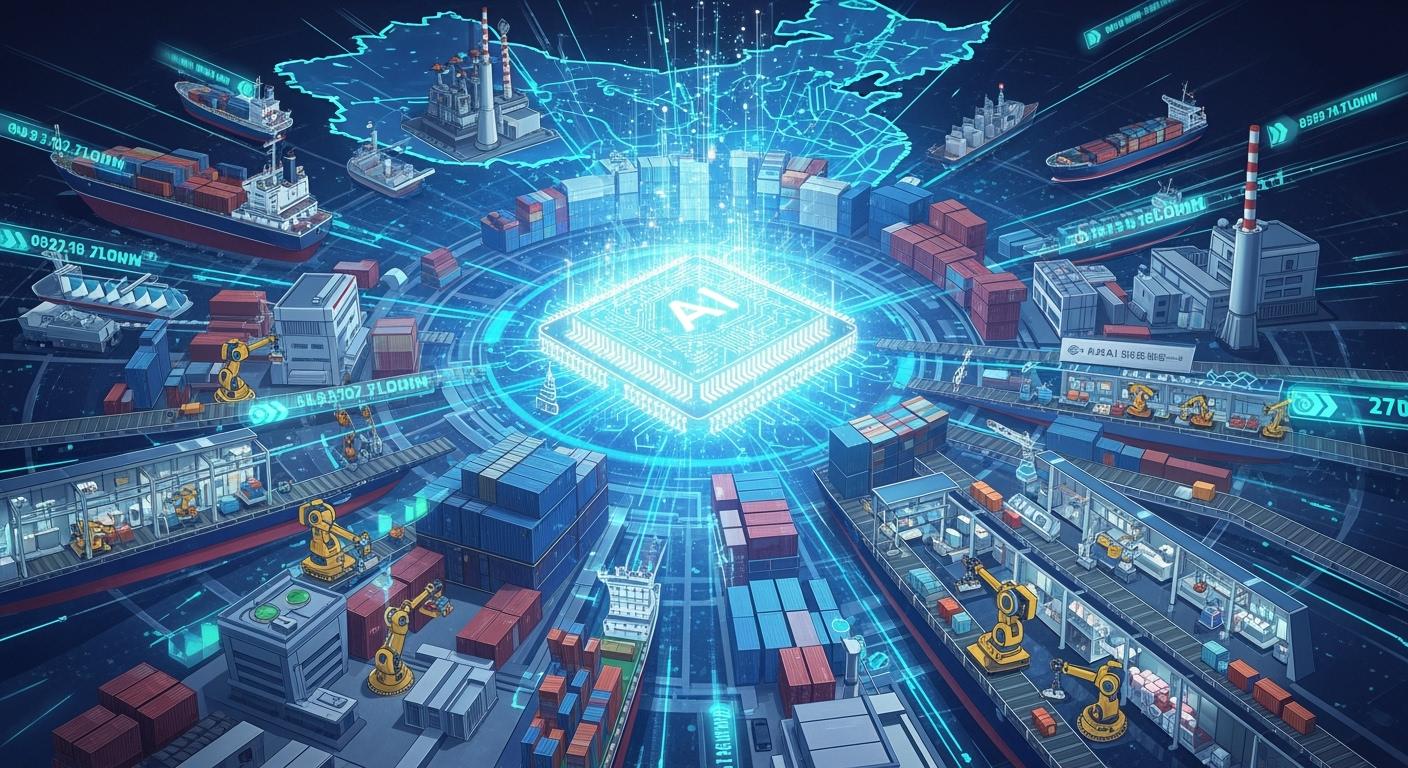
AI isn’t just another buzzword—it’s already giving China’s Supply Chain a real competitive edge. You see this shift in action as Chinese tech giants race ahead in AI chip development.
Huawei now offers its most powerful AI chips and wants to share designs across the country, aiming for less reliance on US tech.
Alibaba recently launched a chip that matches Nvidia’s H20 performance but uses less power.
If you want to stay ahead, you need to move fast. AI brings resilience, self-reliance, and global strength. Now is the time to adapt.
Key Takeaways
AI helps China’s Supply Chain work better and faster. It also helps people work together more easily. Companies that use AI can change quickly when the market changes. They can also lower their risks. Putting money into AI technology helps companies make better choices. It also helps them earn more money. Localisation makes supply chains stronger by using local suppliers and things nearby. AI tools like chatbots and smart sensors make customer service better. They also help with tracking. Working with AI experts can help your business grow faster. Check your AI systems often to make sure they help your business. Learn about new AI trends to keep your supply chain strong and able to compete.
AI’s Impact on China’s Supply Chain
Competitive Advantage
You may ask how AI helps companies in China’s Supply Chain. The answer is clear when you see how businesses use AI to work together and try new ideas. AI helps them earn more money. AI can find patterns, warn about problems, and help people decide things quickly. This lets companies act fast when the market changes or something goes wrong.
Here is what researchers found:
Evidence Description | Source | Year |
|---|---|---|
AI adoption enhances cross-industry collaboration and business models | Liu et al. | 2020 |
AI-driven platforms are reshaping economic dynamics in the Asia-Pacific | Chin et al. | 2025 |
AI-integrated frameworks redefine financial performance metrics | Zhang & Chin | 2025 |
You can see AI is more than just a tool. It is changing the game for China’s Supply Chain. Companies get better teamwork, smarter plans, and higher profits.
Strategic Value
AI does more than make things faster. It helps you spot risks, keep things running, and meet new needs for green and digital ways of working. AI can find risks early, keep the supply chain moving, and help the environment.
Here is how AI compares to old ways:
Evidence Description | Key Metrics |
|---|---|
AI as a primary driver of global supply chain transformation | |
Innovation index climb | 2.16 reflecting rapid AI adoption |
Sustainability outcomes from integrated strategies | 30% better outcomes compared to single approaches |
Role of green technologies alongside AI | Integral to supply chain optimisation rather than compliance add-ons |
You also get these good things:
AI helps you handle risks and keep your business safe.
When you use AI with green tech, your supply chain gets smarter and faster.
China’s strong infrastructure lets you work with partners everywhere.
Direct Answer
How is AI changing China’s Supply Chain now? You see digital tools in many places. Smart sensors and live data help you watch goods and find problems early. AI helps you plan, pick the best routes, and keep shelves full even when things are hard.
Here is what you get:
You build supply chains that recover from shocks.
You make choices using live data, not guesses.
You spot risks early and fix them quickly.
You can change your plans fast when the market shifts.
China is working hard to be self-reliant in AI. The country invests in its own chips and data centres. This helps avoid problems from global tech fights and keeps the supply chain strong. The government and big companies work together to give you the tools you need. You get more control, better safety, and a stronger place in the world market.
In short, AI is not just changing China’s Supply Chain. It gives you the power to stay ahead, move fast, and build a business ready for the future.
AI Adoption Trends

Innovations
New ideas are showing up all over China’s supply chain. AI is not just for the future. It is already changing how goods are planned, moved, and delivered. Many companies use smart robots in their warehouses now. These robots help pick and pack items very fast. Some factories use AI to check products for mistakes. This means you get better quality.
Here is what is happening right now:
More Chinese supply chain companies are using AI.
Big global companies are leading because they have more money.
Many projects do not reach their goals, but more are working well.
Here is what the numbers tell us:
Trend Description | Percentage |
|---|---|
Companies seeing value from AI projects | |
Companies expecting benefits in 2-5 years | |
AI projects not giving expected results | 91% |
You can see that many projects have problems, but most companies still trust AI. In fact, 83% of companies think AI will help them soon.
Technologies
You might wonder which AI tools are making the biggest changes. Machine learning helps you find patterns in lots of data. Computer vision lets robots see and sort things. Robotics makes factories and warehouses faster and safer. These tools help you guess demand, plan routes, and keep shelves full.
The China Global Supply Chain Report 2025 shows some big changes:
Aspect | Description |
|---|---|
AI in Logistics | AI helps you guess demand and improve production. |
Real-time Decision Making | AI lets you react quickly to supply problems. |
Automation in Warehouses | AI keeps things running well, even with fewer workers. |
Route Optimisation | AI finds the best delivery routes, saving time and money. |
Smart Logistics Parks | JD Logistics uses AI to run huge, automated warehouses. |
Robotics in Manufacturing | AI and robots make things faster and more accurate. |
You get quicker deliveries, fewer mistakes, and lower costs.
Key Players
Some big names are leading the way. Cambricon Technologies and Huawei are ahead in AI chip development. Cambricon makes strong chips for many areas, like healthcare and finance. Their focus on research and new designs helps them grow quickly. Huawei also works hard to make better AI chips.
Chinese companies are catching up with global leaders like Nvidia. The gap is getting smaller, but it is still there, especially in hard analytics. Experts say it will take more time for Chinese firms to match Nvidia’s top skills. Still, progress is clear. You now have more choices for AI hardware and software than ever before.
China’s Supply Chain is changing quickly. If you want to stay ahead, you need to watch these trends and act fast.
AI Applications

Planning
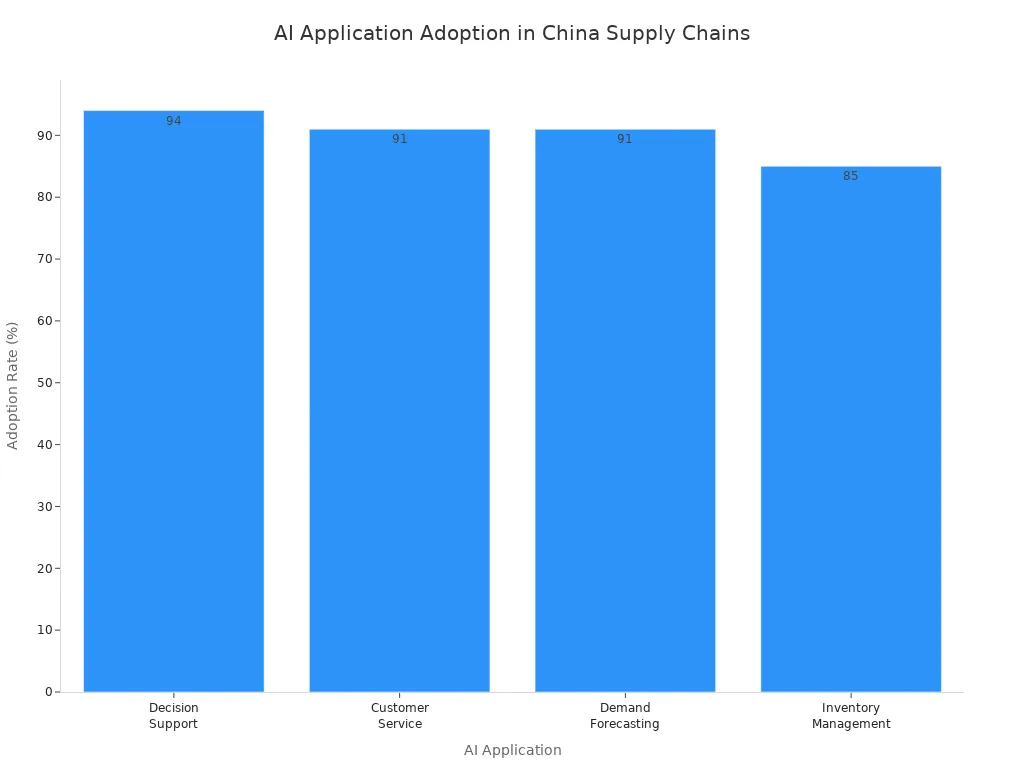
You want your business to run smoothly. AI helps you plan better by giving you clear answers fast. In China, most companies use AI for decision support, customer service, demand forecasting, and inventory management. These tools help you see what is coming next and avoid surprises.
AI Application | |
|---|---|
Decision Support | 94 |
Customer Service | 91 |
Demand Forecasting | 91 |
Inventory Management | 85 |
Forecasting
AI looks at huge amounts of data and finds patterns you might miss. It predicts what customers will want next week or next month. You can order the right amount of stock and avoid running out or having too much. This saves you money and keeps your shelves full.
Risk Modelling
AI spots risks before they become big problems. It checks for delays, supplier issues, or sudden changes in demand. You get alerts early, so you can act fast. This keeps your business safe and ready for anything.
Sourcing
Finding the right suppliers and getting the best prices can be hard. AI makes this easier and faster.
Supplier Assessment
AI checks suppliers quickly and with more accuracy than people.
It handles boring tasks, so you can focus on building good relationships.
AI looks at past supplier performance to help you pick the best ones for quality and reliability.
Pricing Tools
AI studies market prices and trends.
It helps you get better deals and avoid overpaying.
You can react quickly when prices change.
Tip: Let AI handle the numbers and reports. You can spend more time on strategy and growth.
Manufacturing
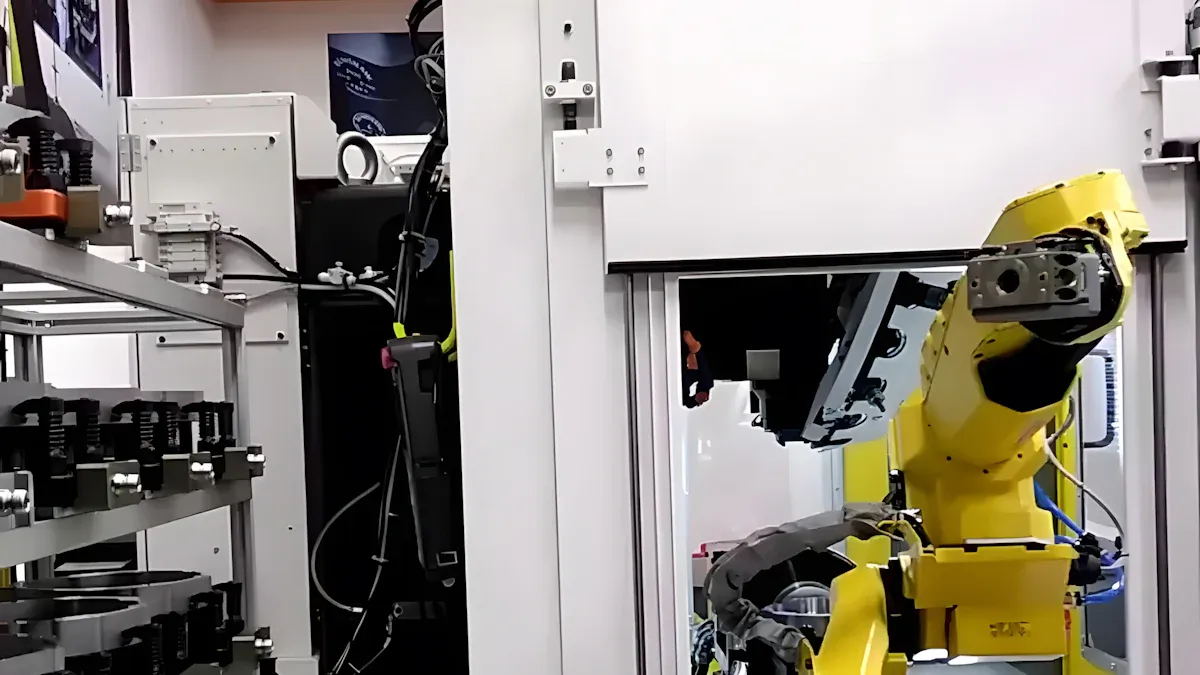
Factories in China now use AI to work smarter, not just harder. You see robots and smart machines everywhere.
Smart Factories
AI helps machines talk to each other. They share data and fix small problems before they stop the line. This means less downtime and more products made on time.
Process Optimisation
AI helps companies learn new things and share ideas.
It encourages more research and new technology, even in simple factories.
You see more investment in better ways to make products.
You get faster production, fewer mistakes, and lower costs. AI gives you the tools to keep up with changes and stay ahead in China’s Supply Chain.
Logistics
AI is changing how you move goods across China. You can now deliver faster, save money, and keep customers happy. Let’s see how AI helps you in logistics.
Route Optimisation
AI helps you find the best way to deliver goods. It looks at traffic, weather, and road conditions. You get the fastest and cheapest routes. When something changes, AI updates your plan right away. This means your drivers avoid traffic jams and deliver on time.
Here’s what you gain with AI-driven route optimisation:
Benefit | Description |
|---|---|
Cost Reduction | AI-driven route optimisation can reduce transport costs by 15–20%. |
Delivery Speed Improvement | Predictive analytics can shorten delivery windows by up to 40%. |
Fuel Consumption Reduction | AI optimisations can reduce fuel use by 10–15%. |
Last-Mile Delivery Cost Reduction | AI has reduced last-mile delivery costs by up to 20% in major cities. |
Real-Time Adaptability | AI systems adjust routes based on live data, improving delivery performance. |
You can see that AI not only saves money but also makes your deliveries much quicker. Your business can handle more orders and keep up with demand.
Tip: Use AI to plan your delivery routes. You will spend less on fuel and reach your customers faster.
Tracking
AI gives you real-time tracking for every package. You always know where your goods are. If there is a delay, you get an alert right away. This helps you fix problems before they grow.
AI-powered tracking also builds trust with your customers. They can check their order status at any time. When people know where their package is, they feel more confident about your service.
Here’s how AI tracking helps you:
You spot problems early and fix them fast.
You keep your customers informed.
You improve your delivery success rate.
AI in logistics transforms your business. You deliver faster, spend less, and make your customers happy.
Service
AI is not just for moving goods. It also helps you talk to your customers and solve their problems.
Chatbots
AI chatbots answer questions day and night. Your customers get help right away, even after hours. Chatbots can track orders, answer common questions, and solve simple problems. This means your team can focus on bigger tasks.
Here’s why chatbots matter:
They give instant answers to customers.
They handle many chats at once.
They never get tired or make mistakes.
Note: When you use AI chatbots, you improve customer satisfaction and save time for your staff.
AI in service makes your business more responsive. You build trust and keep your customers coming back.
Resilience in China’s Supply Chain
Technology Gaps
AI cannot fix every problem. There are still big gaps in technology. Many companies want to use AI, but they do not have the right tools. They also do not have enough skilled people. Some factories use old machines. These machines cannot connect to smart systems. Other companies find it hard to collect good data. This makes it tough for AI to work well.
If you spend money on risk management and new technology, you will see real results. McKinsey studies show that companies who focus on resilience earn almost five times more profit than those who only try to save money. This means you should do more than just cut costs. You should build a stronger supply chain.
Here are some common problems you might face:
Old equipment that does not work with AI.
Not enough skilled workers for new systems.
Poor data quality makes AI less accurate.
High costs to upgrade technology.
You can close these gaps by training your team. You can also update your machines. Working with partners who know AI helps too.
Security
Security is very important when you use AI in your supply chain. You need to keep your data safe and protect your systems from attacks. In China, the government takes security very seriously. Many groups work together to keep things safe. This is called a multi-agency approach.
The rules focus on acting early and making sure everyone follows the law. The government checks how companies use data and build their AI systems. This helps you avoid problems before they start. It also keeps your supply chain running smoothly.
If you want to stay safe, you should:
Check your systems for weak spots.
Train your staff to spot security risks.
Follow the latest rules and best practices.
Tip: Make security part of your daily routine, not just a one-time job.
Regulation
Regulation shapes how you use AI in your business. In China, the government sets clear rules for AI development. They want AI to help the economy, keep people safe, and protect national interests.
The government steps in early to guide companies. They focus on data security and how algorithms work. You need to watch for new laws and make sure your systems follow them.
Global events can also affect your business. The US-China trade war makes it harder for Chinese companies to get advanced chips. Some companies, like Huawei, have lost a lot because of these restrictions. China is now investing more in its own chip industry. They are also limiting exports of key materials. This push for self-sufficiency helps protect China’s Supply Chain from future shocks.
If you keep up with regulations and invest in local technology, you can build a supply chain that is ready for anything.
Localisation
You might hear about localisation in China’s supply chain. It means making your supply chain fit local needs. You use local suppliers, technology, and workers. This helps you avoid problems from global trade fights or sudden changes.
Why does localisation matter for you? When you work with local partners, you get faster deliveries and lower costs. You also build strong relationships with people who know the market well. If something goes wrong in another country, your business keeps running. You do not have to wait for parts or products from far away.
Here are some ways to use localisation to make your supply chain stronger:
Work with local suppliers who know what you need.
Use local warehouses to keep goods close to customers.
Pick local transport companies for quicker deliveries.
Invest in local technology and software that suits your business.
Tip: Localisation helps you react fast when things change. You can switch suppliers or change plans without big delays.
Let’s look at some facts about localisation in China’s supply chain:
Localisation Strategy | Benefit |
|---|---|
Local sourcing | Reduces delivery times by 30% |
Local manufacturing | Cuts costs by up to 20% |
Improves customer satisfaction | |
Local tech adoption | Boosts supply chain flexibility |
More companies in China are choosing localisation. They want to avoid risks from global politics and trade wars. You can do this too. If you use local resources, your supply chain will be ready for anything.
Localisation also helps you follow new rules and standards. China has strict laws for data and product safety. Local partners know these rules and help you follow them. You do not have to worry about breaking the law or losing business.
Note: When you focus on localisation, you build trust with your customers. They know you care about quality and safety.
Localisation is not just a trend. It is a smart way to make your supply chain strong and flexible. You get better results and protect your business from surprises.
Business Guidance

Implementation Steps
Readiness
You want to use AI in your supply chain, but you need to check if your business is ready. Start by looking at your current systems. Ask yourself if your data is clean and easy to use. Make sure your team understands basic AI tools. You should set clear goals for what you want AI to do. If you know your strengths and weaknesses, you can make better choices.
Tip: Run a simple audit. List your tech, your data, and your team’s skills. This helps you see where you need to improve.
Partnerships
You do not have to do everything alone. Many companies work with partners who know AI well. You can team up with tech firms, universities, or start-ups. These partners bring new ideas and help you learn faster. You get access to better tools and more experts. Pick partners who share your goals and values.
Look for partners with strong AI experience.
Choose firms that understand your industry.
Build trust by sharing information and working together.
Pilots
Start small before you go big. Run pilot projects to test AI in one part of your supply chain. You can try AI for forecasting, tracking, or customer service. Watch how it works and measure the results. If the pilot goes well, you can use AI in more areas. Pilots help you learn without risking too much.
Best Practices
Change Management
Change can be hard for your team. You need to help people accept new ways of working. Talk to your staff about why AI matters. Give them training and support. Listen to their worries and answer questions. Celebrate small wins to keep everyone motivated.
Note: Good communication makes change easier. Share updates often and ask for feedback.
Performance
You want to know if AI is helping your business. Set clear targets for speed, cost, and quality. Use simple numbers to track progress. Review your results often. If something does not work, change your plan. Keep improving your systems to get the best results.
Performance Area | What to Measure | How Often |
|---|---|---|
Speed | Delivery times | Monthly |
Cost | Savings | Quarterly |
Quality | Error rates | Monthly |
Strategy
Alignment
Make sure your AI plans match your business goals. You should link AI projects to what matters most for your company. If you want faster deliveries, focus on logistics AI. If you want better customer service, use chatbots. Stay flexible and adjust your strategy as things change.
Innovation
AI moves fast. You need to keep learning and trying new things. Encourage your team to share ideas. Test new tools and methods. Watch what leaders in China’s Supply Chain are doing. Stay curious and open to change.
Emoji: 🚀 Keep pushing forward. AI can help you grow and stay ahead.
Future Outlook
Trends
You see new trends shaping China’s supply chain every day. AI is changing how companies work and plan for the future. You notice more businesses using AI to watch contracts and spot risks. This means you can fix supplier problems quickly. As trade rules change, AI helps you track compliance and keep good records.
Here are some trends you should watch:
AI improves demand forecasting, so you manage stock better.
Automation in factories and warehouses boosts speed and cuts mistakes.
Blockchain gives you real-time tracking and helps you follow rules.
Companies like Meituan, Tencent, and PDD benefit from strong AI support and new policies.
Innovation in green technology grows, even when old industries slow down.
Firms working with AI often have better value and more chances to grow.
Tip: Stay alert to these trends. They help you build a smarter, safer supply chain.
Predictions
Industry experts say AI will keep changing China’s supply chain. You can expect big improvements in how you work and what you achieve. For example, Jade Textiles in Zhejiang saw production efficiency jump by 30% and defects drop by 25% after using AI. This made their business more attractive to investors. In 2021, China’s AI start-ups brought in $17 billion in foreign investment.
You might hear people call AI forecasting a “crystal ball.” It helps companies like Huawei and Tencent plan better and grow faster. AI boosts export value and productivity. You get more done with fewer mistakes.
Company | Efficiency Gain | Defect Reduction | Investment Attracted |
|---|---|---|---|
Jade Textiles | 30% | 25% | Yes |
Huawei, Tencent | High | Low | Yes |
Note: If you use AI, you can expect better results and more interest from global partners.
Opportunities
China wants to lead the world in AI by 2030. This opens new doors for you and other international businesses. You can join in AI development or work on green technology projects. China’s push for carbon neutrality matches global goals, so you find more chances to collaborate.
If China builds more chip factories, the cost of AI drops everywhere. Smaller companies and countries can use AI more easily. You see new markets open up as access to AI grows. Two main AI systems—Western and Chinese—may appear. You can choose which one fits your business best.
China’s tech industry links with renewable energy, matching global trends.
The electric vehicle market needs advanced electronics, creating demand for AI-powered solutions.
Heavy investment in AI means more chances for you to partner or invest.
🚀 The future looks bright. If you act now, you can grow with China’s supply chain and find new success.
You can see AI is changing how you work in China’s Supply Chain. If you act quickly, you make better decisions and stay ahead of problems. AI helps you spot risks, manage stock, and keep your business running smoothly. To stay strong, you should:
Use AI to boost resilience and handle disruptions.
Keep improving your systems and watch for new trends.
Take these steps now. The global supply chain keeps changing, so staying proactive gives you the edge.
FAQ
What is the biggest benefit of using AI in China’s supply chain?
You get faster decisions and fewer mistakes. AI spots problems early and helps you plan better. Your business becomes more flexible and ready for change.
Can small businesses in China use AI for their supply chains?
Yes, you can start small. Many AI tools work for businesses of any size. You do not need a big budget to see results.
How does AI help with supply chain risks?
AI finds risks before they grow. You get alerts about delays, shortages, or price changes. This helps you act quickly and avoid bigger problems.
Do I need special skills to use AI in my supply chain?
You do not need to be an expert. Many AI tools are easy to use. Training your team helps you get the most from new systems.
Will AI replace jobs in the supply chain?
AI changes some jobs, but it also creates new ones. You can use AI to handle boring tasks. Your team can focus on bigger challenges.
How can I measure the success of AI in my supply chain?
Set clear goals. Track delivery times, costs, and error rates. Review your results often. If you see improvements, your AI works well.
Is AI safe for my supply chain data?
Most AI systems use strong security. You should check your systems often and follow best practices. This keeps your data safe from attacks.

TangBuy: A Smarter Way to Dropship in 2025
If you're looking to stay competitive with dropshipping in 2025, speed and trend-awareness are key. TangBuy helps you stay ahead with real-time product trends, fast fulfilment, and factory-direct sourcing. With over 1 million ready-to-ship items, 24-hour order processing, and seamless Shopify integration, TangBuy makes it easier to test, scale, and succeed in today's fast-moving eCommerce landscape.
See Also
Avoid Common Supplier Communication Errors for Better Results
15 Affordable Items That Yield High Profits in 2025
Affordable High Margin Products for Your 2025 Store
Five Effective Ways to Source Dental Goods Online in 2025
Lucrative Opportunities for Sellers in the Smartwatch Sector
